Danish Easter – Tradition, hygge and funny habits
The Danish Easter is made up of four public holidays: Maundy Thursday, Good Friday, Easter Sunday, and Easter Monday. In Denmark, Easter is less about strict religious customs and more about hygge, good food, and spending time with the people you like best.
Over the years, several charming – and sometimes slightly quirky – traditions have become part of the celebration. Here are some of the most beloved ones.
Gækkebrev – The Fool’s Letter
One of the sweetest Easter traditions is the gækkebrev. This is a hand‑cut paper letter, often carefully decorated, containing a rhyme and the sender’s name written only as dots. The recipient must guess who it’s from. Guess wrong, and you owe the sender a chocolate Easter egg. It’s usually children who send gækkebreve, but adults occasionally join in for fun (and for chocolate).
A classic rhyme is: “Mit navn det står med prikker, pas på de ikke stikker” – which in English means: “My name is written in dots, careful they don’t sting.”
The Danish Easter Lunch
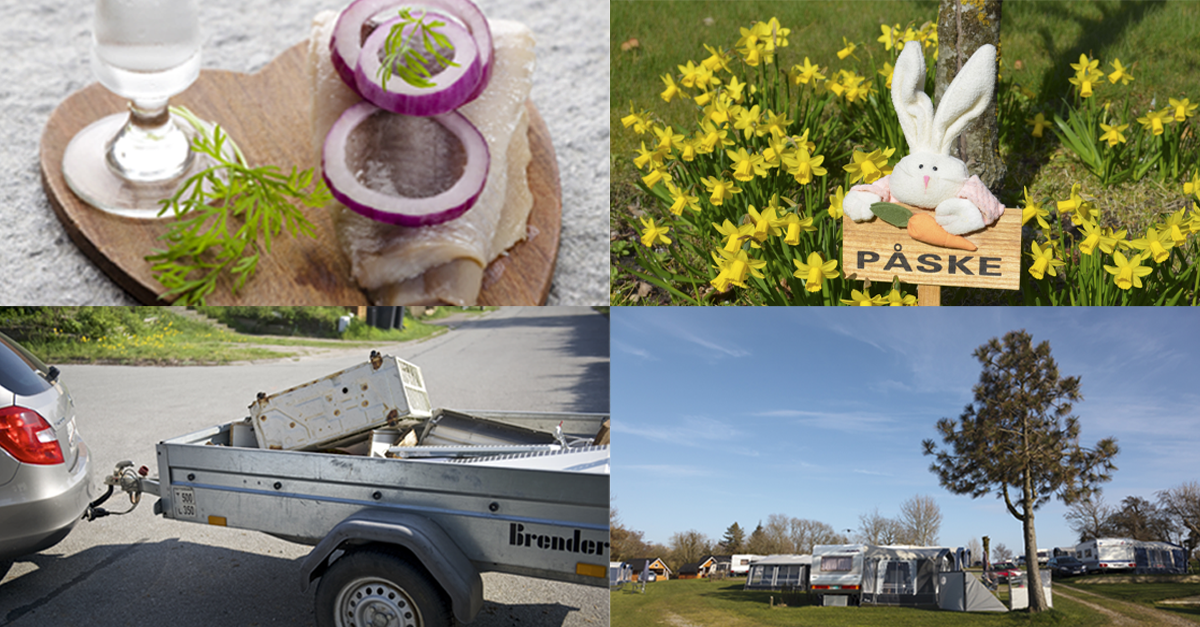
Nothing says “Easter in Denmark” like a long, cozy lunch packed with delicious food. Families and friends gather around tables loaded with classics such as pickled herring with eggs and curry dressing, Danish meatballs with potato salad, warm liver pâté, and breaded, fried plaice with remoulade. Everything is enjoyed with rye bread (rugbrød) and plenty of good company.
Of course, no Easter lunch is complete without beer and snaps – and the traditional toasts that go with them. It’s the perfect recipe for laughter, full stomachs, and a very sleepy afternoon.
Påskeharen – The Easter Bunny
Though the Easter Bunny originally hopped over from Germany, it has found a cozy home in Denmark too. Children love searching for the colourful chocolate eggs the bunny is said to hide in the garden or inside the house.
The annual egg hunt brings excitement, fresh air, and sometimes muddy shoes – but it’s all worth it when a shiny chocolate egg is found behind a bush or under a chair.
Fun Facts and Easter Habits
Easter in Denmark isn’t only about eggs and lunches – it also marks the beginning of several seasonal Danish rituals:
Summer House Daydreaming
The Easter holidays send half the country to open houses at summer homes. With a few extra days off and a hint of spring in the air, many Danes suddenly feel an urgent need to imagine themselves drinking coffee on a sunny terrace by the sea. People rarely buy during Easter – it’s more of a warmup. Real decisions usually happen in May or June, once the coffee fantasy has settled.
Camping Season Kick‑Off
Many campsites reopen at Easter, making it the unofficial start of the camping season. Families pack caravans and tents, eager to enjoy spring even if the weather insists on pretending it’s still winter.
DIY Madness
Easter also seems to unleash an almost magical urge to renovate, clean, and garden. DIY stores and garden centres are packed, recycling stations have traffic jams of trailers, and Danes everywhere ask themselves why they suddenly had to trim all the hedges this weekend.
Whether it’s “hyggelige” lunches, paper‑cut letters, or a nationwide attack of spring cleaning, Danish Easter traditions bring fun, togetherness, and a good dose of seasonal cheer.
Written by: Carsten Christoffersen