


On this page you will find
information about
LIVING IN DENMARK
Which topic would you
like to explore first?
Learning Danish
-
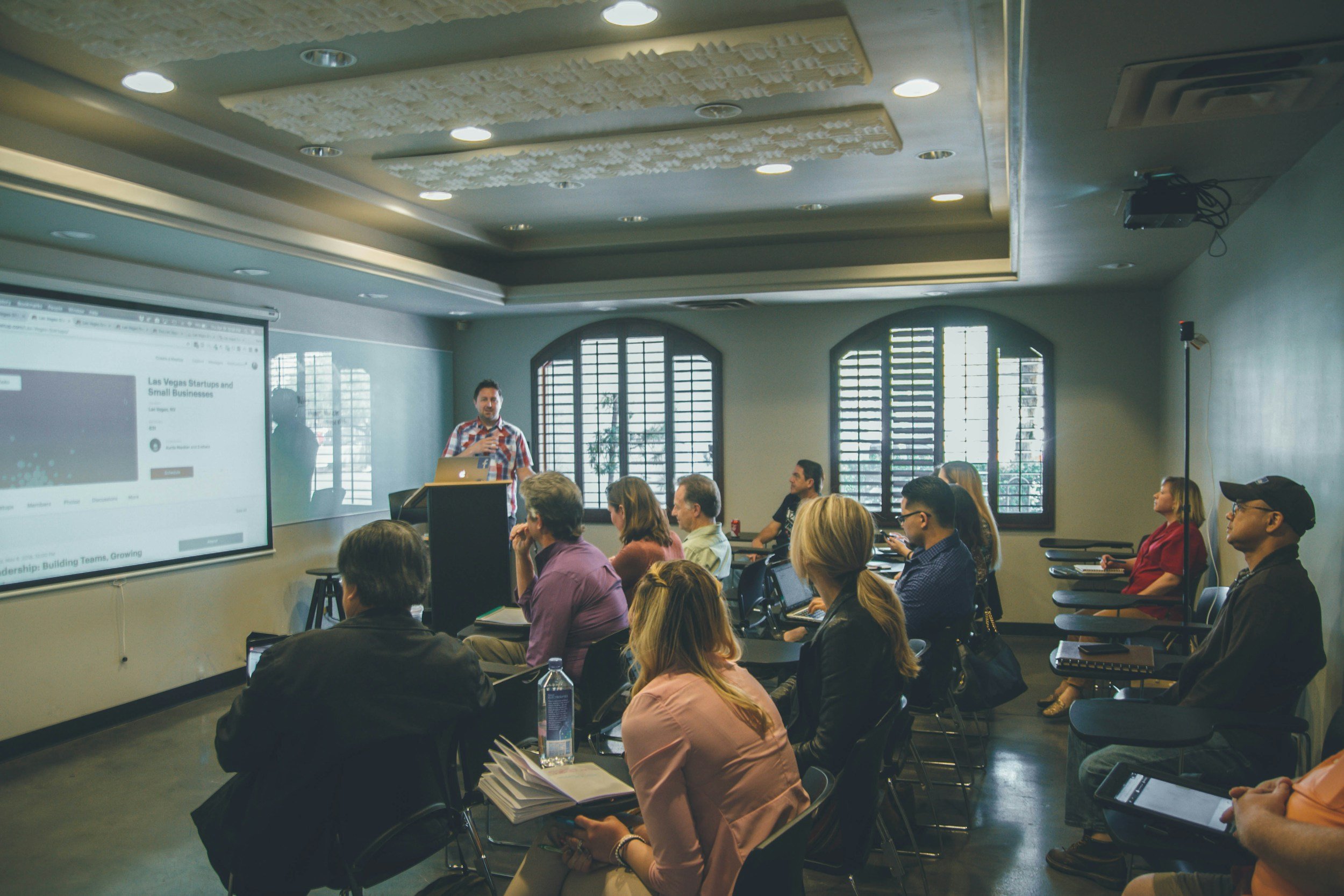
All international citizens over 18 years of age, that legally reside in Denmark and hold a personal CPR-number are entitled to free-of-charge classes in Danish as a Second/Foreign Language.
After registering your Danish address and receiving your CPR-number, you will receive a referral to Danish language classes by your home municipality. This referral is a letter which is sent to you via Digital Mail.
After receiving the referral, you are free to sign up to a language center.
The right to participate in these classes free-of-charge generally expires after 5 years of living in Denmark.
The official Danish language courses are divided into 3 courses that are designed to match the participants' level of education:
Danish Course 1 for students who have no or a poor educational background
Danish Course 2 for students who have a short educational background
Danish Course 3 for students who have a lower or upper secondary or higher educational background.
All courses are divided into modules and can be completed with the respective state exam (PD1, PD2, PD3).
For information regarding on-campus Danish language courses for students & staff at AAU, please visit HF&VUC Nord’s website.
For information regarding Danish language education for foreign children and youth under 18, please go here.
-
Municipal language centers (sprogcenter), the official Danish language courses (see above) are taught by trained Danish teachers. Students can usually choose between morning, day, and evening classes and many centers now offer hybrid (online/offline) and online teaching.
Aside from the official courses, language centers might offer other courses like FVU Dansk (Forberedende Voksenuddannelse = “Preparatory Adult Education”) which follow a different curriculum. Please ask your local sprogcenter for options.
You can find the language center in your municipality here.
It is possible to attend classes at a sprogcenter in another municipality – e.g., the municipality your workplace is located.
-
Industry-related Danish language training
Danish language courses designed for people with Danish as a foreign language are offered at AMU centres, technical schools, business schools, social and health care schools, etc. The courses are designed to help students improve the Danish language skills required for carrying out specific jobs and, if applicable, complete a professional job training qualification.
Are you curious about where and how to improve your Danish language skills regarding your profession? You are welcome to reach out to your local language center or International House North Denmark.
VUC: is short for Voksenuddannelsescenter (translates to ”adult education center”). VUCs are public schools and offer courses at foundational and high school level, many also in Danish as a Second Language. See the VUCs located in North Denmark below:
HF & VUC Nord: Aalborg, Hjørring, Brønderslev, Aabybro, Frederikshavn, Aars, Hadsund, Hobro
Thy-Mors HF & VUC: Thisted, Nykøbing Mors, Hurup
See VUCs in all of Denmark here: https://vuc.dk/kort/
You also can consult the following websites and insert “dansk som andetsprog” (Danish as a second language) as search item:
Uddannelsesguiden (in Danish)
Voksenuddannelse.dk (in Danish)
-
In many cities and towns, individuals and groups/associations offer help with learning Danish – be that through casual conversations, homework tutoring or other engaging activities.
Below, you can find a list of offers we are aware of:
Aalborg Kommune:
FrivilligAalborg (Danish Refugee Council): Sprog- og lektiecaféer & Tal Dansk Caféer
ElskAalborg International (an offer by “Ansgars Church”)
Sammen på Tværs: Sprog- og kulturmatches mellem danske seniorer og internationale tilflyttere
Bla Bla Language Exchange Aalborg (Facebook event)
Brønderslev Kommune:
RedCross Sprogtræning for voksne ukrainere (for Ukrainian adults)
Mariagerfjord Kommune:
RedCross Social café, inkl. sprog- og lektiecafé, Hadsund
Thisted Kommune:
RedCross Sprogtræning, Thisted
Online:
-
If you wish to get (additional) private tutoring in Danish, you can – of course – arrange and pay for a private tutor or teacher.
Private tutors (usually native speakers) and teachers (with teacher training) can e.g., be found on freelance online platforms. Furthermore, several private language schools and individual teachers offer group classes and individual sessions at different price points, both directly to learners and through agreements with employers.
Getting around
-
Cycling is a popular mode of transport in all of Denmark – especially in the cities. Cyclists in Denmark enjoy an extensive network of bike lanes, which are often clearly separated from the main roads, making them relatively save to use.
Remember that, as a cyclist, you are a member of traffic, which means that you have to abide by the traffic rules, follow the signs and take all other members of traffic into consideration.
If possible, you should always stay on those marked bike lanes and only enter the main road when necessary.
Watch this video about rules in the traffic
-
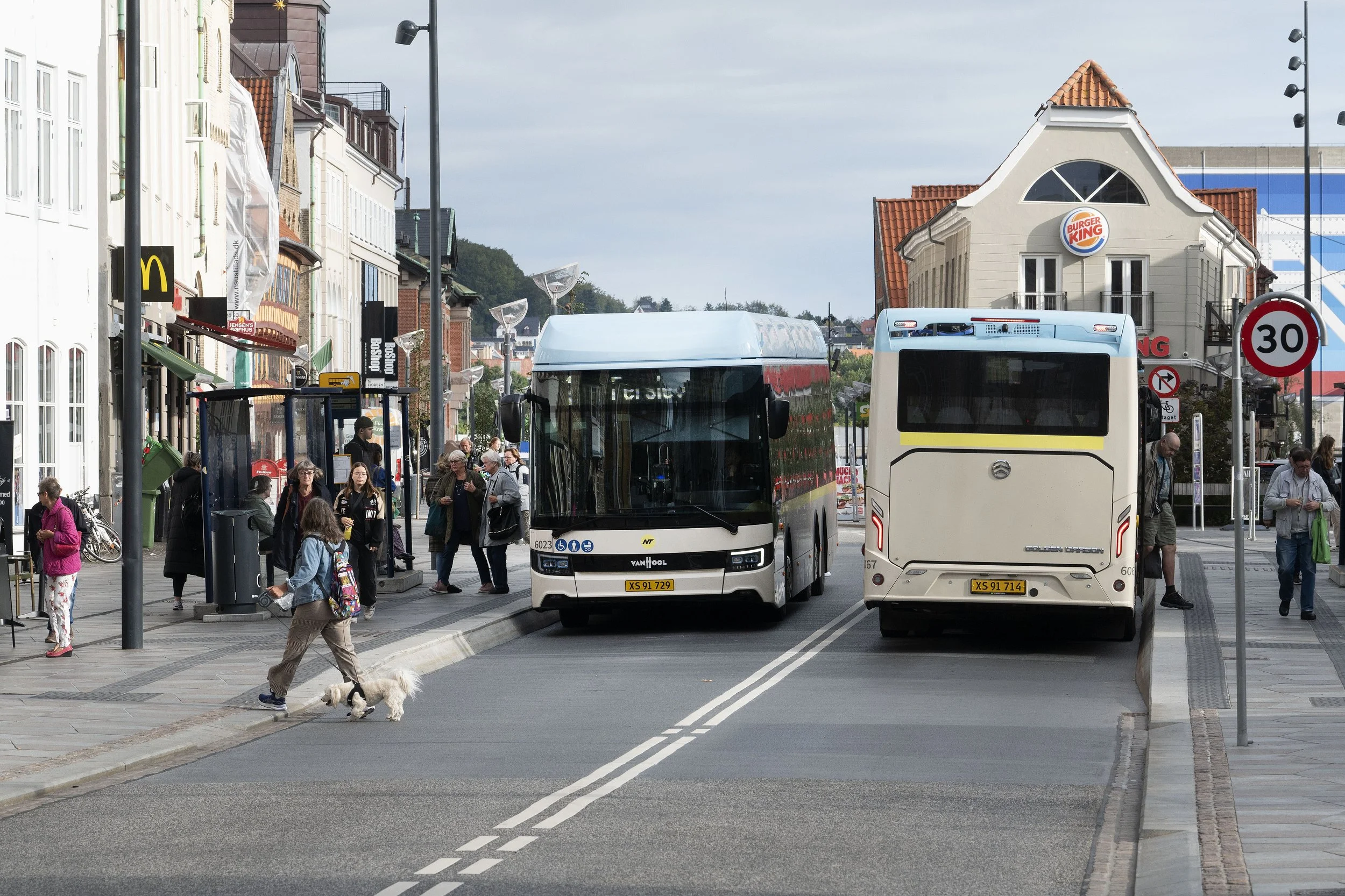
North Denmark, like the rest of the country is equipped with a tight-knit network of trains and buses, including express buses.
All passengers need to hold a valid ticket or travel pass to board a bus or train. On regular buses, tickets can be bought from the bus driver.
Note that it is not possible to buy tickets on trains as well as Aalborg’s plus bus.
Most people buy their tickets and travel passes online, using one of the official apps.
Apps you can use in all of Denmark:
Rejseplan – On Rejseplan, you can search for connections and follow your bus/train in real time. Furthermore, the app offers the option to compare prices and buy tickets.
Rejsekort – The rejsekort app will fully replace the plastic rejsekort card by May 2026. It can be used like the plastic card to check in and out when travelling with public transport in all of Denmark. Your rejsekort is connected to your bank account, making travelling completely cash-free.
Rejsebillet - Offers pre-paid nation-wide single tickets, commuter products, and special tickets for e.g., tourists and in connection with events.
DSB app - In the DSB app, you can search for connections and buy tickets for train and bus connections across Denmark. With a profile, you can furthermore collect loyalty points.
Regional: In North Denmark (Nordjylland) public busses and regional trains are operated by NT – Nordjyllands Trafikselskab.
The NT Journey Planner app, provides departures and arrivals for buses, trains, and flexible transport. It also displays the cost of your journey, the route to the bus stop or station, delays etc.
Discounts:
If you’re commuting by public transport, buying a commuter card (pendlerkort) instead of individual tickets might be worth it. You can find the price of a commuter card for your chosen connection/zones in the apps mentioned above.
Discounted ticket prices are available for young people and students, you can read more about the youth card (ungdomskort) here.
You can find more information on assistance for people with disabilities, passenger rights, ferries/ports and (domestic) flights/airports here.
-
Depending on where you obtained your foreign driver’s license, you might have to exchange it for a Danish license within a certain time period.
You can find general information on the use and exchange of foreign driver’s licenses here.
Driver’s License from another EU country:
Generally speaking, your license will be valid in Denmark until it expires.
Driver’s License from outside EU:
There are different rules and regulations for driver's licenses from different non-EU countries. Some licenses are valid for a short period until they have to be exchanged for a Danish license. For other licenses, you can be asked to take an additional test in order to obtain a licence valid in Denmark. You can find the regulations for all countries here.

Feeling at home in North Denmark
-
Culture Companions is our bespoke buddy programme and social network which builds a lot of small bridges between recently arrived internationals and the local community.
The programme lasts for 4 months and is a combination of group activities and individual meetups.
If you would like to learn more about Culture Companions or to sign up as a host or a mentee, please click here.
-
Welcome September is a nation-wide initiative aimed at showing internationals in Denmark a warm welcome and appreciation during the month of September.
Many municipalities arrange a number of both causal and more informative events on various topics – targeting newly arrived as well as “seasoned” internationals.
The specific activities for the upcoming Welcome September are published every August. You can find them here.
-
Being a member of an association of a club is a big part of Danish culture. Many children, youth and adults hold memberships and are active in one or multiple clubs – often related to sports.
The Danish word for association is “forening”; the word for club “klub”. Most if not all sports clubs and hobby associations are welcoming to international members.
You can usually find all registered associations/clubs through your municipality’s website:
Frederikshavn Foreningsoversigt
Don’t hesitate to reach out to the club that you are interested in.
-
Volunteering plays a big role in Danish society. Taking up a volunteer role – even just for a few hours per week or month – can help you feeling more at home in Denmark, find (Danish) friends, improve your language skills and can even be a gateway to a paid job.
It is very common to include volunteering jobs on one’s CV, under a separate headline.
Many associations and clubs post their open volunteer positions here:
Frivilligjob.dk
Volunteering.dkIf you can’t find what you’re looking for, feel very free to reach out to an association, club or organisation that interests you and ask whether they need new volunteers.
Most municipalities furthermore have a “frivilligcenter”, where you can get inspired about volunteering in your area and receive individual sparring. You can find the frivilligcenter closest to you here.
Useful Danish words:
forening – association
klub – club
idrætsforening/IF – sports club
træner – coach
frivillig – volunteer
frivilligt arbejde – volunteer work
frivilligcenter – “Center for Volunteers/Volunteering”
-
Did you know that you don’t have to be a Danish citizen to vote in Danish local/regional and EU elections?
Here is a quick overview of your voting rights as a foreigner residing in Denmark:
Local/Regional Elections (every 4 years):
You are eligible to vote, if you:
are above 18 years of age
permanently reside in Denmark (in the m
are a citizen of an EU Member State or a citizen of Iceland, Norway, or the UK.
If you are a citizen of a country other than those mentioned above, you will not be entitled to vote until you have been permanently residing in Denmark for a period of 4 years.
People who are entitled to vote in local and regional elections are automatically registered in the electoral register.
EU elections (every 5 years):
You will be entitled to vote in the European Parliament elections in Denmark if you are above 18 years of age and either:
have Danish citizenship and legally reside in Denmark or another EU Member State, or
are a citizen of another EU Member State and legally reside in Denmark.
You need to register to vote in the EU elections in Denmark. Please find more information on that and the application form here.
You can choose whether you want to vote “for Denmark” of “for” the EU-country where you hold citizenship.
If you wish to vote in/for your home country, you need to register through that country’s system.
Elections to the Danish national parliament (Folketinget):
You must be a Danish citizen to be eligible to vote in the elections to the national parliament.
Referendums:
You must be a Danish citizen to be eligible to vote in national referendums.

For parents & families
-
All children with legal residence in Denmark have the possibility to access childcare in public (or private) daycare facilities.
You can choose to have your child in daycare with a dagpleje, vuggestue, or børnehave. Which one your child will attend depends on your child's age, your preference, and availability.
Both public and private daycare offers require payment from the parents. How much you pay depends on the number of hours per week your child spends at the facility. Parents can receive subsidies based on e.g., income and siblings.
Usually, children attend a daycare facility in the municipality they live in. In some cases, it might be more practical for them to attend a facility in a neighboring municipality. You can read more about that following this link.
Read more about subsidized daycare here.
Read up on the rules for daycare facilities, see waiting lists, sign up your child and withdraw your application here.
Most daycare facilities furthermore have their own websites, where you can learn more about them.
Different types of daycare
Dagpleje (age 26 weeks to 3 years)
If you choose to have your child in “family daycare” (dagpleje), the child will be taken care of by a childminder (dagplejemor). Each childminder can look after up to 4-5 children. Childminders can be employed by the municipality or run a private dagpleje. In each case, the children will usually spend their day at the childminder’s private home.
Vuggestue (age 26 weeks to 3 years)
A vuggestue (nursery) is a larger institution that accommodates more children than a dagpleje. Usually, the children are divided into smaller groups. They are looked after and taken care of by trained staff. Nurseries are run by the municipality or privately owned.
Børnehave (age 3 to 6 years)
A børnehave (kindergarten) is designed for children from around age three until they start in school. Here, they will learn social, physical, and communication skills in interaction with other children and the kindergarten teachers (pædagoger) and assistants.
Daginstitution (age 26 weeks to 6 years)
These institutions combine vuggestue and børnehave under one roof. The staff will ensure that kids of all ages are cared for according to their needs and abilities and arrange activities for different age groups.
-
Denmark has “compulsory education”, meaning all children are required to complete school until and including 9th grade. From age 15 to 17, teenagers are required to either continue in formal schooling or actively take part in another form of education/course/job which prepares them for adulthood, employment and/or higher education.
Read more and get a comprehensive overview of the Danish educational system here.
-
Dus, klubber osv.
-
All children and youth residing in Denmark are – by law – required to receive an education. It is, in Denmark, legal to homeschool your own children.
However, homeschooling is regulated and needs to comply with certain rules and standards.
You can read more about this topic on the website of the Ministry for Children and Youth (in Danish) and on your municipality’s website.
-
Danish as a second language
Children that are at “folkeskole-age” (grade 0 to 9, circa ages 6 to 16) usually attend a regular school, where they receive teaching in Danish as a foreign language and partake in (some of) the regular classes.
Teenagers that are above 15/16 years of age often attend a specialised education center, where they learn Danish before they enter a regular high school or vocation school.
When you move to Denmark with children/teenagers and you have questions about this, don’t hesitate to reach out to their school or us at International House North Denmark.
Classes in a child’s mother tongue
Children/youth that are from an EU/EEA country, Greenland, or the Faroe Islands are entitled to attend classes where they’re taught their mother tongue. If you have questions about this, please reach out to your child’s school.
-
Are you about to have a child in Denmark? Congratulations! There are a few practical matters to take care of before and after welcoming your new family member to this world. You can find everything you need to know here.
Parental leave:
All parents are entitled to leave in connection with childbirth. The carrying mother also has the right to 4 weeks of leave prior to the birth.Special rules apply for single parents, who have chosen to have children alone, or for parents who did not live together when the child was born. These parents receive a different number of the leave. Other rules also apply to adoptive parents and parents in LGBT+ families.
Your rights to receive salary, benefits and other financial support depend on your employment, among other things.
For salaried employees: Make sure to check in your contract/employee handbook, with your employer and potentially your union (fagforening) what benefits your employer provides and what you need to do in order to obtain these.Naming your child:
Please note that in Denmark, not all names can and will be accepted as your child’s given name. If the name of your choosing is not already on the list of approved names, you can request for it to be added. So, if you’re planning to give your child a unique name or one that is common in your home country but not in Denmark, it would be a good idea to familiarize yourself with the rules and regulations regarding naming in Denmark.Residence:
When a baby is born in Denmark by parents who are foreign nationals, the parents need to apply for residence permit or an EU residence document for the child. Please apply through newtodenmark.dk. -
You can find detailed information on the legal and practical dimensions marriage, divorce, adoption, cross-border families, custody and child/family benefits etc. on these two official pages: lifeindenmark and the Agency of Family Law (Famileretshuset).
See also their page specifically designed for children affected by divorce/separation (in Danish).

Good to know
-
International citizens can apply for permanent residence in Denmark if certain conditions apply.
Different rules apply to EU-citizens/people holding an EU residence document and third country nationals residing in Denmark under the Danish Aliens Act.
Please note that you need to send an application regardless of your grounds of residence/which jurisdiction applies to you. Permanent residence is not granted automatically!
Read the rules and apply for permanent residence here.
Read the rules and apply for permanent residence according to EU-regulations here.
-
The acquisition of Danish citizenship is subject to certain conditions regarding – amongst other things – permanent residence in Denmark, language skills, contribution to the labour market (work) and knowledge of Denmark. You can find a full list of requirements and a guide on how to apply here.
See also the website of the Ministry of Immigration and Integration
Minors/Children
Minors usually acquire Danish citizenship though inclusion in the naturalisation of one of their parents. Certain minors can acquire Danish citizenship independently of their parents.
Children born after July 1st 2014 to at least one parent holding Danish citizenship automatically acquire Danish citizenship.
Children born in Denmark to two foreign parents do not automatically acquire Danish citizenship.