
The Danish School System - the extended version
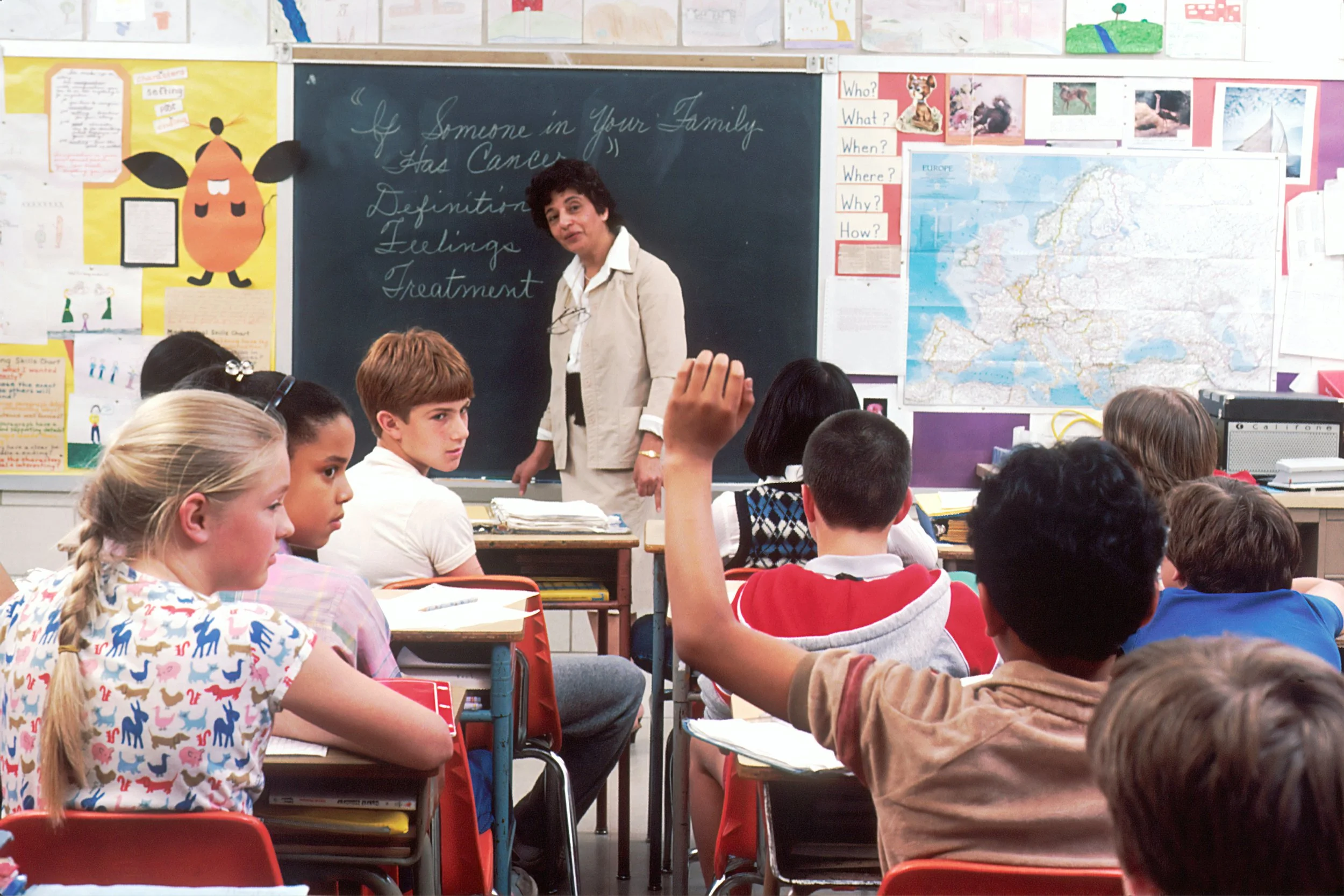
Denmark has a “compulsory education”-system
Compulsory education
All children are required to complete school until and including 9th grade. From age 15 to 17, teenagers are required to either continue in formal schooling or actively take part in another form of education/course/job which prepares them for adulthood, employment and/or higher education.
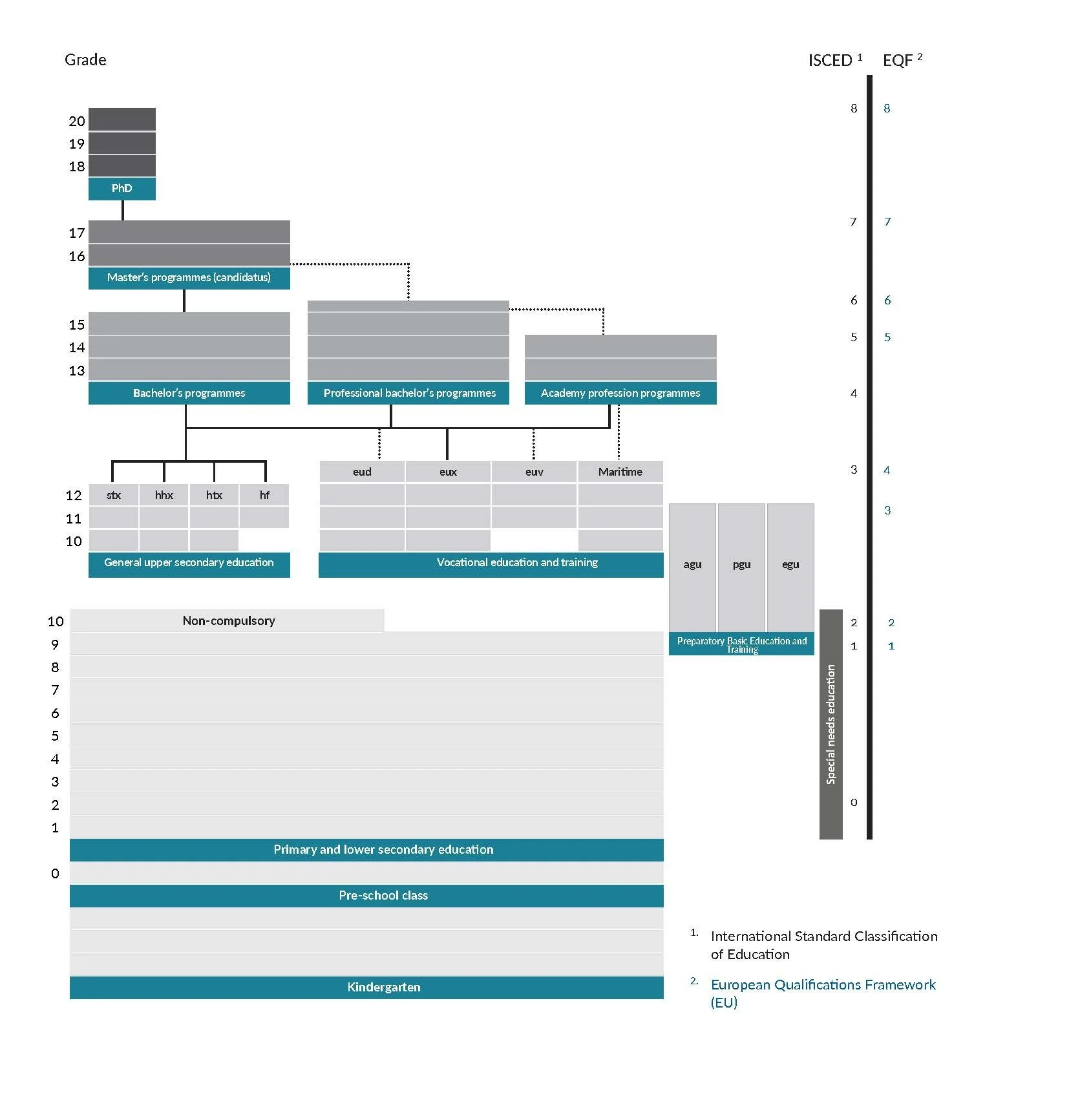
This is a comprehensive overview of the Danish education system
Source: Overview of the Danish Education System | Ministry of Children and Education
Primary & Middle School (Ages 6 to 16)
Basic formal education (grundskole) starts the year that a child turns 6 and primary and middle school (grade 0 to 9) are combined in one school, commonly referred to as folkeskole or grundskole.
Grade 0 is also referred to as “børnehaveklasse” (kindergarden class) and covers the first year of primary school. Contrary to its name, børnehaveklasse takes place at the school, not at the kindergarden.
Choice of school & Enrollment
The schools in a municipality each belong to their own school district. Your residential address determines which school district you belong to, and thus the school at which your child will be offered a spot. However, you have a free choice of school, which means that if you do not want your child to go to the municipal primary and lower secondary school in your district, you are free to enroll your child in one outside your school district or in a completely different municipality, providing there is space.
You can find a list of all schools in your municipality and check which school your child will be offered a spot at based on your address on your municipality’s website.
You need to sign your child up for school. Enrollment to schools is done online. If your child already resides in Denmark before they turn 6, you will receive a letter from your municipality in the year it is time to sign them up for school.
You can read a lot more about the school system here.
High School (from age 16)
A high school degree qualifies students to continue their education at university level. High school usually takes 2 to 3 years to complete. High School can be entered immediately after completing 9th grade or after completing the voluntary grade 10. It is not mandatory to attend high school. Students can choose to move to e.g., a vocational programme directly after 9th grade.
In Denmark, there are different types of high schools to choose from. They focus on different subjects and skills and are therefore well suited for pupils with different interests and talents.
STX – Studentereksamen (2-3 years) = Higher General Education
Students choose a profile within languages, social sciences, natural sciences or arts.
HF – Højere Forberedelseseksamen (2 years) = Higher Preparatory Exam
Especially targeted at students planning on taking a professional bachelor’s or business academy degree. Students can choose a “subject-package” that corresponds to the professional area they wish to work/take further education in.
HHX – Merkatil studentereksamen (3 years) = Commercial Exam
Special focus on commerce/business admin., finance, economics, and foreign languages.
HTX – Teknisk studentereksamen (3 years) = Technical Exam
Special focus on technical subjects and the natural sciences.
EUX – Ehrvervsfaglig studentereksamen (4-5½ years) = Vocational High School Degree
Students combine a vocation education with teaching on high school level, leading to them obtaining both a high school degree and a vocation degree.
You can read more about the different types of high schools, which subject are taught and find the sign-up page here.
For more detailed information, you can also refer to uddannelsesguiden.dk/Gymnasiale uddannelser (in Danish).
10th grade
Taking 10th grade is not mandatory but a good option for students who have finished 9th grade but are not yet ready to move on to high school or a vocational programme. 10th grade can usually be taken at municipal education center (close to) where you live or at private boarding schools (efterskole) across the country.
Folkeskole, Friskole, Efterskole, Gymnasium – what is what?
Folkeskole
Folkeskole runs from grade 0 (”kindergarden class”) to grade 9 and is the public primary/middle school most children attend.
Friskole
Friskoler are privately run primary/middle schools which require the parents to pay a school fee. You can choose to send your child to a private school instead of a folkeskole. There are different private schools that are e.g., congregational or operate according to specific pedagogical principles (Waldorf, Montessouri, etc.). Many – although not all – international schools are private schools. All private schools are monitored and have to ensure that the level of teaching is on par with that of the public schools.
Efterskole
Efterskoler are privately run boarding schools that offer grades 8 to 10 and often specialize in certain areas like sports, technology, drama, arts/music, outdoor life, sustainability, etc. Students live in dorms at the school and parents are required to pay a fee for school and board. Many Danish teenagers attend efterskole for one year. Students have to be at least 14 years of age and have completed 7th grade in order to attend an efterskole.
You can read more about efterskole on lifeindenmark.dk/Efterskole and efterskolerne.dk.
Gymnasium
Gymnasium is the Danish word for high school. Students can attend gymnasium after successfully completing 9th grade. You might also come across terms like “Handelsgymansium” or “Teknisk Gymnasium”.