The Danish Primary and Lower Secondary Education system
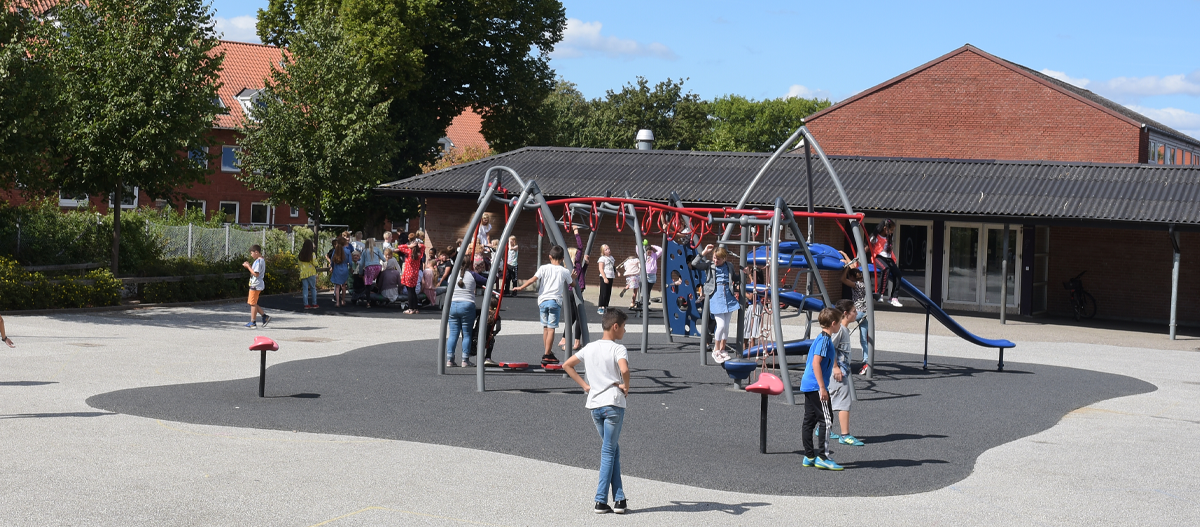
Folkeskole - The primary and lower secondary school
The Danish” Folkeskole” consists of:
One year of pre-school education from the age of 6
Nine years of education from 1st to 9th grade and
A 10th grade which is optional.
How and when to enroll your child in school
In Denmark, children start school in the same year, they turn six years old. The school year runs from August until June.
If you are unsure whether your child is mature enough to start school in the year they turn six, you can talk to your child’s kindergarten for advice and apply for a postponement.
The municipality will send a notification via digital post when it is time to enroll your child in school. The deadline for registering your child for school varies from municipality to municipality. Often, the deadline will be in January or February. Your child will be offered a place in the school district, where your address is located. However, you are free to enroll your child outside of your school district or in another municipality if there are spots available due to the rule of free choice of school in Denmark.
The Danish School System: From Grade 0 to 10th grade
The first year is called “0. klasse” or “kindergarten class”, which serves as a transition from pre-school to formal education. It focuses on social skills, play-based learning, and preparing children for structured lessons.
After this, students enter primary and lower secondary education, which runs from 1st grade to 9th grade. The curriculum includes Danish, mathematics, English, science, history, social studies, physical education, and creative subjects like music and art. From 3rd grade, students begin learning English, and later, a second foreign language such as German or French.
The teaching approach emphasizes group work, critical thinking, and collaboration rather than rote memorization. There is a strong focus on equality and inclusion, ensuring that all students receive support regardless of ability.
In the final year, in 9th grade, students take final exams in core subjects.
After completing 9th grade, some students continue to 10th grade, which is optional. 10th grade offers additional preparation for upper secondary education or vocational training. It is often chosen by students who want to strengthen their academic skills or explore career options.
Alternative options
If you want to explore alternative options to the “Folkeskole”, you also have the choice to let your child enter an independent school. There are two possibilities called “Friskole” and “Privatskole”. They are self-governing and you pay for your child to attend them.
Friskole (Independent School)
The term “friskole” covers an independent school that operates outside the public school system, but still follows national educational standards. It is often based on specific values, teaching methods, or cultural traditions. Parents pay tuition, but the schools also receive government subsidies.
Privatskole (Private School)
A private school is fully funded by tuition fees paid by parents, without government subsidies. These schools have more freedom in their curriculum and teaching approach compared to public schools.
International options
If you would like your child to enter an international school, there is only one located here in the northern part of Denmark. It is the Skipper Clement Skolen located in Aalborg. For further information you can visit this link: https://skipperclementskolen.dk/en/
Efterskole (Continuation School)
After the 7th grade, your child can choose to go to a self-paid Continuation School called “Efterskole”. These institutions are private independent boarding schools, which cover 8th-10th grade, for students aged 14-18 years. It is common that students spend only one year at this school. Usually, these schools offer all regular subjects in addition to specialised subjects, i.e.: sports, arts, programming, etc.
Overall, the Danish school system is known for its student-centred approach, free education, and emphasis on well-being and democratic values. For further information about the Danish school system, you are welcome to visit the links listed below:
Written by: Carsten Christoffersen